
Operating System
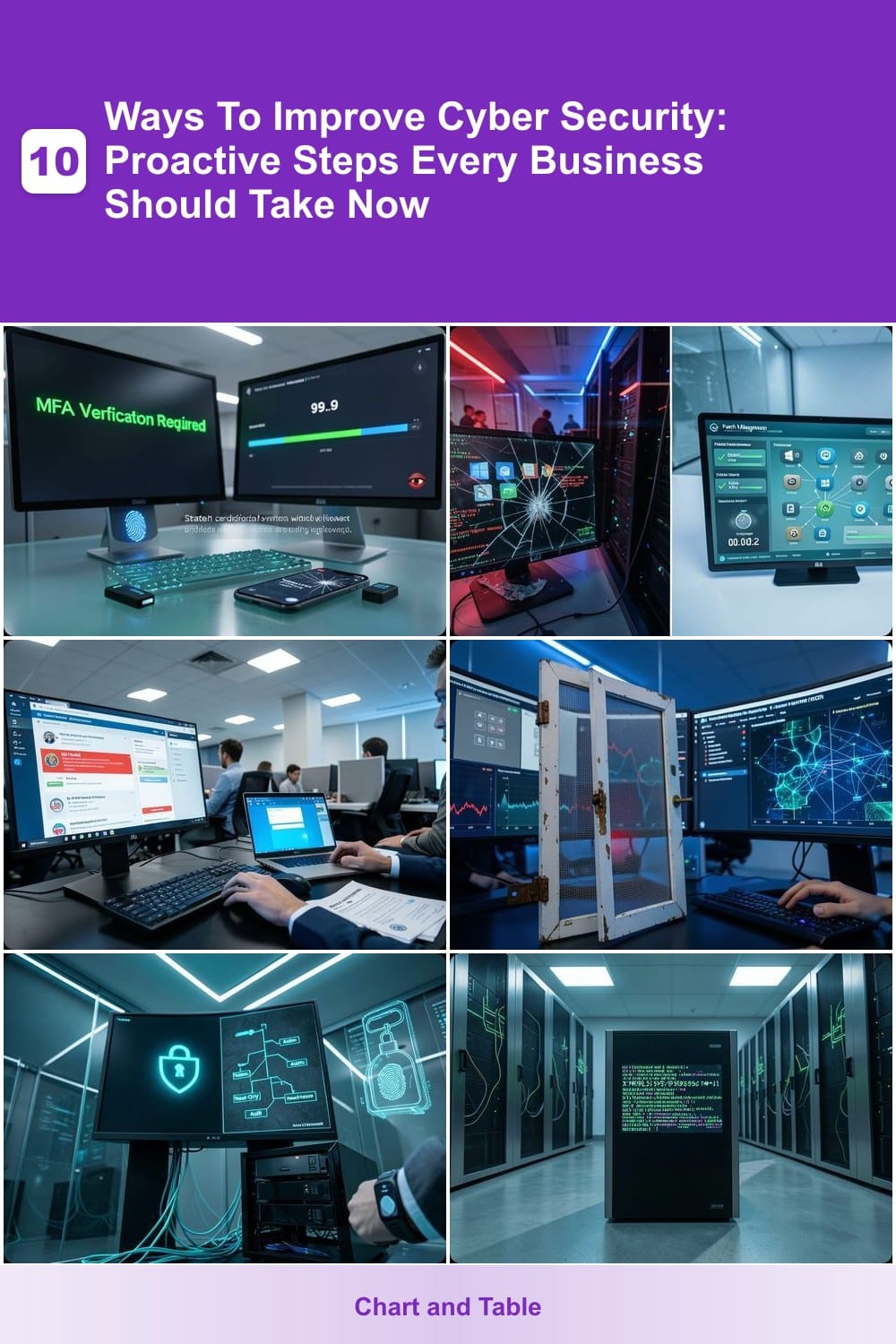
Cyber threats evolve daily, but businesses often overlook simple yet powerful defenses. These ten actionable strategies—ranging from employee training to advanced tools—will fortify your digital perimeter before an attack occurs.
Implement multi-factor authentication everywhere

Credential theft is the #1 entry point for cyberattacks—but multi-factor authentication (MFA) stops 99.9% of automated breaches before they start. Unlike basic passwords, MFA requires a second verification step (like a code, biometric scan, or hardware token), making stolen credentials useless to hackers.
Start by enabling MFA on all accounts, including email, cloud services, admin panels, and even third-party apps like Slack or Trello. Services like Google Authenticator, Duo, or Microsoft Authenticator offer free, easy-to-deploy solutions with push notifications or one-time codes. For critical systems, consider YubiKey hardware tokens for phishing-resistant security.
This is the simplest, highest-impact upgrade you can make—small businesses and large enterprises alike see immediate protection against brute-force attacks and credential stuffing. 💪
Automate patch management for all systems

Cybercriminals exploit unpatched systems within minutes of vulnerabilities being public—yet many organizations still rely on manual updates. Automating patch management across Windows, Linux, and even IoT devices ensures critical fixes are deployed in under 48 hours, slashing your attack surface before threats spread.
Tools like WSUS for Windows, Patch Manager Plus, or Tanium integrate with vulnerability databases (e.g., NIST NVD) to prioritize CVSS 9.0+ exploits first. Schedule updates during off-hours to avoid downtime, and enforce rollback policies for failed patches. For mixed environments, SaltStack or Ansible streamline cross-platform deployment with minimal IT overhead.
This approach is ideal for SMBs with limited IT staff or enterprises managing hybrid clouds. Start with a pilot group to validate compliance before rolling out enterprise-wide—your security team will thank you. 💪
Conduct quarterly phishing simulation tests

Your employees might click on anything—88% of breaches start with a human mistake. Phishing simulations aren’t just a checkbox; they’re your frontline defense against CEO fraud, fake invoices, and malicious links that bypass even the best firewalls.
Use platforms like KnowBe4 or GoPhish to send customized, scenario-based tests (e.g., a "urgent vendor payment" email with a spoofed domain). Track metrics like click rates, reporting speed, and training completion—most organizations see a 70% drop in susceptibility after just three rounds. Automated follow-ups reinforce lessons, turning mistakes into muscle memory.
This is non-negotiable for SMBs handling customer data or remote teams—where one click can unlock your entire network. Start with quarterly drills, then ramp up to monthly if your metrics lag. 💪
Deploy endpoint detection and response tools

Modern cyberattacks bypass traditional antivirus like a thief slipping past a flimsy screen door—Endpoint Detection and Response (EDR) tools like CrowdStrike or SentinelOne close that gap by monitoring behavioral patterns in real time, not just file signatures. These solutions detect zero-day exploits, lateral movement, and even insider threats by analyzing how processes interact across your network.
With sub-second response times, EDR tools isolate compromised devices automatically, providing forensic details to understand the attack vector. Features like AI-driven anomaly detection and cloud-based threat intelligence ensure you’re always protected against evolving tactics. Unlike legacy antivirus, EDR doesn’t just react—it predicts and prevents breaches before they escalate.
Perfect for businesses handling sensitive data (healthcare, finance, or legal), EDR transforms your endpoints into a fortified perimeter. Start with a free trial from providers offering scalable pricing—your first line of defense against the next big attack. ✨
Enforce least-privilege access controls
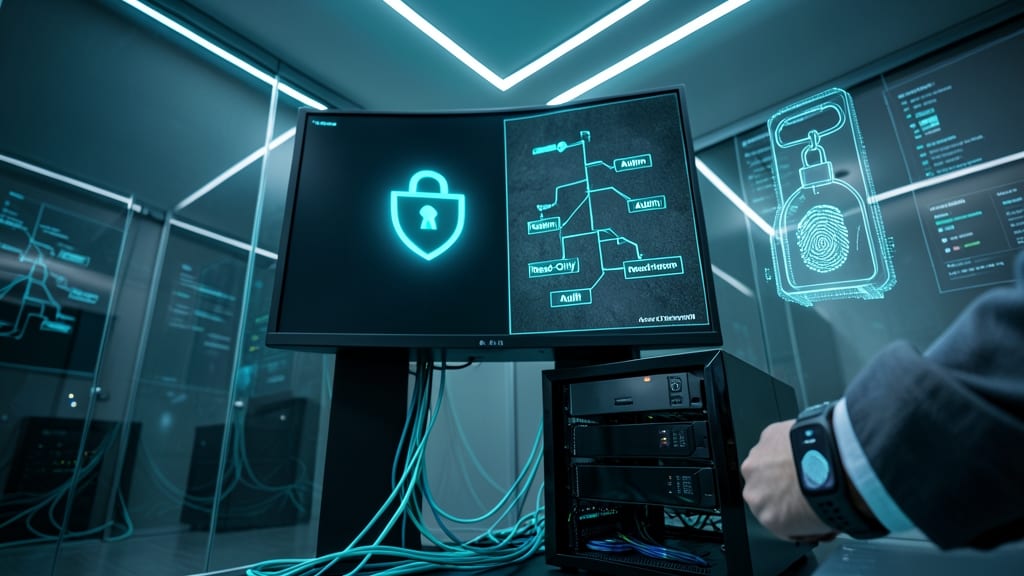
After MFA and patching, the next critical layer is least-privilege access controls—the "need-to-know" rule for your digital assets. Most breaches spread because attackers move laterally once they gain a foothold, but role-based permissions in Active Directory or Azure AD can slam the door shut on their escape routes.
Configure just-in-time access for admins and department-specific permissions for employees (e.g., HR can’t access payroll systems unless absolutely required). Tools like Microsoft’s Privileged Identity Management or AWS IAM let you audit and revoke access automatically after fixed periods. For cloud environments, AWS Organizations SCPs or Google Cloud’s IAM Conditions add granularity—like restricting access to specific IP ranges or time windows.
This isn’t just for enterprises: Small businesses using Google Workspace can enforce least-privilege via admin console roles, while macOS/Linux admins leverage sudoers files or OpenLDAP. The goal? Limit blast radius—if credentials are stolen, attackers hit a dead end. 💪
Encrypt all sensitive data in transit and at rest

Even if your systems are breached, encrypted data stays useless to attackers—that’s the power of modern encryption. Unlike firewalls or MFA, encryption doesn’t rely on stopping intrusions; it neutralizes the damage after the fact by scrambling data so thoroughly that brute-force decryption becomes impossible with today’s computing power.
Start with TLS 1.3 for all web traffic—it’s the gold standard for securing data in transit, offering forward secrecy so even if a key is compromised later, past communications stay locked. For stored data, BitLocker (Windows) or AES-256 (Linux/macOS) encrypt entire drives, while database-level encryption (like SQL Server Transparent Data Encryption) protects sensitive records at the source. Most modern OSes and cloud providers make this setup trivial with built-in tools.
This isn’t just for compliance—healthcare providers, financial firms, and even small businesses handling customer data need this layer. Even a lost laptop becomes a paperweight if its drive is encrypted. 💻
Monitor network traffic with SIEM solutions

While firewalls block known threats, SIEM (Security Information and Event Management) solutions act as your cybersecurity X-ray—scanning network traffic for hidden patterns that even advanced attackers miss. Tools like Splunk or IBM QRadar correlate logs across servers, endpoints, and cloud services to flag anomalies like sudden data transfers at 3 AM or brute-force login attempts from unfamiliar geolocations.
These platforms go beyond basic monitoring by using machine learning to establish baselines for normal behavior, then triggering alerts when deviations exceed thresholds. For example, Splunk’s Enterprise Security can detect lateral movement between systems in real-time, while QRadar’s off-box flow analysis identifies encrypted malware C2 (command-and-control) traffic that evades traditional inspection. Both integrate with ticketing systems to automate response workflows.
Perfect for mid-to-large organizations handling sensitive data (healthcare, finance, or regulated industries), SIEM solutions pay for themselves by preventing breaches that could cost millions in fines and downtime. Start with a cloud-based SIEM like Splunk Cloud if your team lacks in-house expertise. ✨
Backup critical data with air-gapped systems

Ransomware isn’t just a threat—it’s an existential risk for businesses that can’t recover their data. The solution? Air-gapped backups, which physically isolate critical files from network attacks, ensuring they remain untouchable even if your primary systems are compromised.
Start with a dedicated backup server (like Synology’s DS1821+) that never connects to the internet, then use write-once, read-many (WORM) storage (e.g., LTO-9 tapes) for immutable archives. Rotate backups weekly—keeping at least three versions offline guarantees you can restore from a point before an attack. Tools like Veeam or Acronis automate this process while verifying integrity with checksums.
This approach is ideal for financial institutions, healthcare providers, or any business handling sensitive client data. Even small teams can implement it with a $1,500–$3,000 setup—far cheaper than downtime costs. ⚡
Train IT teams on incident response plans

When breaches strike, hesitation costs millions—yet most IT teams only react to incidents instead of practicing responses. The solution? Annual cyberattack simulations that force your team to think under pressure, just like a real breach.
Use tools like FireEye Red Team or MITRE ATT&CK frameworks to stage controlled attacks, testing how quickly your team isolates infected systems, communicates with leadership, and restores services. Measure response times, document gaps, and refine playbooks—because a 30-minute delay in containment can turn a minor incident into a full-blown crisis.
This isn’t just for security teams—include HR, legal, and PR in drills to ensure everyone knows their role. Small businesses with limited resources can start with free NIST Cybersecurity Framework templates to structure their first exercise. 💪
Leverage threat intelligence feeds

Cybercriminals rely on reused tactics—but you can outmaneuver them by tapping into real-time threat intelligence. Platforms like AlienVault OTX and FireEye iSIGHT aggregate data on malicious IPs, phishing domains, and emerging attack patterns, giving you a proactive shield against known threats.
These feeds integrate seamlessly with firewalls, SIEM tools, or even email gateways to automatically block threats before they reach your network. For example, OTX’s community-driven sharing means you benefit from global threat hunting—no need to wait for a breach to act. Many solutions offer free tiers, making this accessible even for small teams.
Ideal for security-conscious businesses in finance, healthcare, or retail, where attackers target industry-specific vulnerabilities. Start with a single feed to test its impact—you’ll quickly see how actionable intelligence turns passive defense into a predictive advantage. ✨