
Operating System
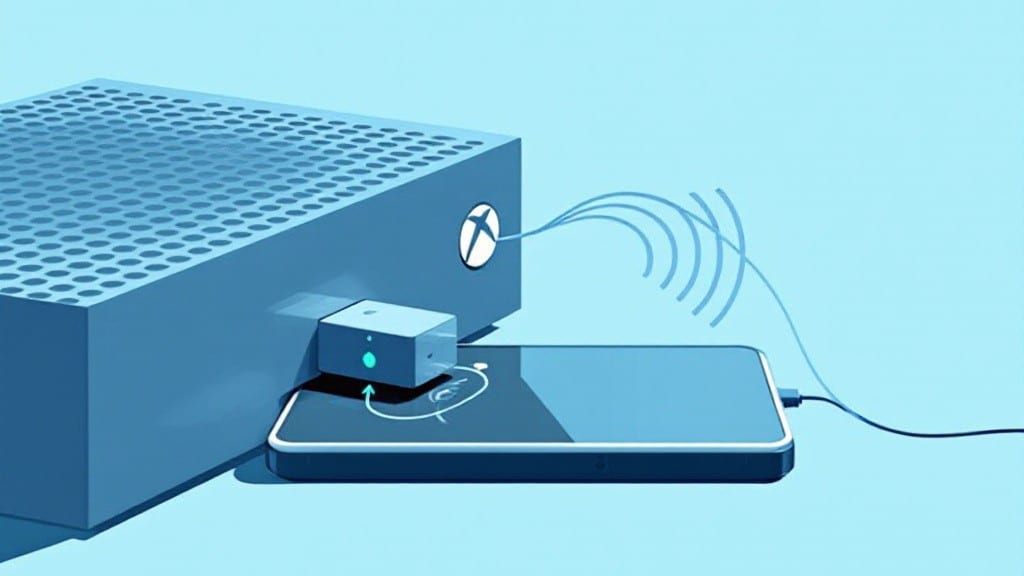
You can cast to an Xbox, but with important limitations: Xbox consoles (Series X|S, One) support screen mirroring from Windows 10/11 PCs via Miracast or apps like Xbox Console Companion, while mobile devices need the Xbox Wireless Adapter or Xbox App. Unlike Chromecast or Fire Stick, Xbox can't receive casts from other devices, though it can output to external displays via HDMI.
Xbox's mirroring capabilities work best when you're sharing your console's screen to another device, not the other way around. For example, you can stream your PC's display to your Xbox for gaming or presentations, but your Xbox won't act as a receiver for Netflix casts from your phone.
The Xbox Wireless Adapter is your best bet for mobile devices, offering stable connections with minimal lag when properly configured. 🔥
What's interesting is how Xbox handles these connections differently than traditional smart TVs. While Roku or Fire TV can receive casts from almost any device, Xbox prioritizes performance for gaming scenarios.
This means you'll get better results mirroring high-refresh-rate gameplay from your PC to your Xbox than you would trying to cast a 4K movie from your phone to your console.
💡 In This Article
- Xbox Screen Mirroring vs Casting: Key Differences
- Best Apps and Accessories for Xbox Screen Sharing
Xbox screen mirroring vs casting: key differences
Here's what's actually happening under the hood: Xbox consoles use Miracast for wireless screen mirroring, which creates a direct peer-to-peer connection between devices without requiring an internet router.
This protocol was designed for low-latency applications like gaming, with a maximum resolution of 1080p at 30fps for Xbox One and Series S, while Series X supports up to 4K at 30fps.
The key difference from traditional casting is that Miracast doesn't require any intermediary device - your Xbox becomes the endpoint, not a receiver like Chromecast or Fire Stick.
The Xbox Wireless Adapter changes the game for mobile devices by creating a dedicated 5GHz Wi-Fi Direct connection with latency as low as 15-20ms, which is crucial for gaming scenarios.
This adapter essentially turns your Xbox into a wireless display receiver that can handle 1080p at 60fps - something standard Miracast can't achieve.
What most people don't realize is that this adapter uses a proprietary protocol that's more efficient than standard Wi-Fi Direct, which explains why it works better than generic screen mirroring apps for mobile devices.
This architecture explains why Xbox can't act as a casting receiver like Roku or Fire TV. Traditional casting protocols like DLNA or AirPlay require the receiving device to handle content decoding and rendering, which Xbox isn't optimized for.
Instead, Xbox focuses on being the content source - whether you're mirroring your PC or streaming from the console itself.
The HDMI ARC limitation further demonstrates this: while Xbox can output audio to a soundbar via HDMI ARC, it can't receive content through it, maintaining its role as the primary entertainment hub rather than a passive receiver.
Consider these technical limitations when setting up mirroring:
- Windows PCs: Require Miracast-enabled Wi-Fi adapter (802.11ac or newer) and Windows 10/11 version 1809 or later
- Android devices: Need either the Xbox Wireless Adapter or the Xbox App (which uses a different protocol)
- iOS devices: Limited to the Xbox App due to Apple's restrictions on Miracast
- Performance cap: All wireless methods max out at 60fps, even on Series X
The science behind why Xbox can't receive casts from other devices lies in its hardware architecture. Unlike streaming devices that include dedicated media processors (like Broadcom chips in Fire TV), Xbox consoles prioritize game processing power with custom AMD APUs.
These components are optimized for rendering games rather than decoding various streaming formats, which explains why Microsoft hasn't implemented casting receiver functionality. The Xbox ecosystem treats the console as the primary entertainment source, not just another display in your living room.
What this means for you is that Xbox excels at being the content originator rather than the receiver. If you're looking to mirror your PC for gaming or presentations, you'll get excellent performance.
But if you want to cast movies from your phone to your Xbox, you'll need to work around these limitations using the Xbox App or Wireless Adapter. The trade-off is that when it works, the connection quality is superior to what you'd get with generic screen mirroring solutions. 💫